
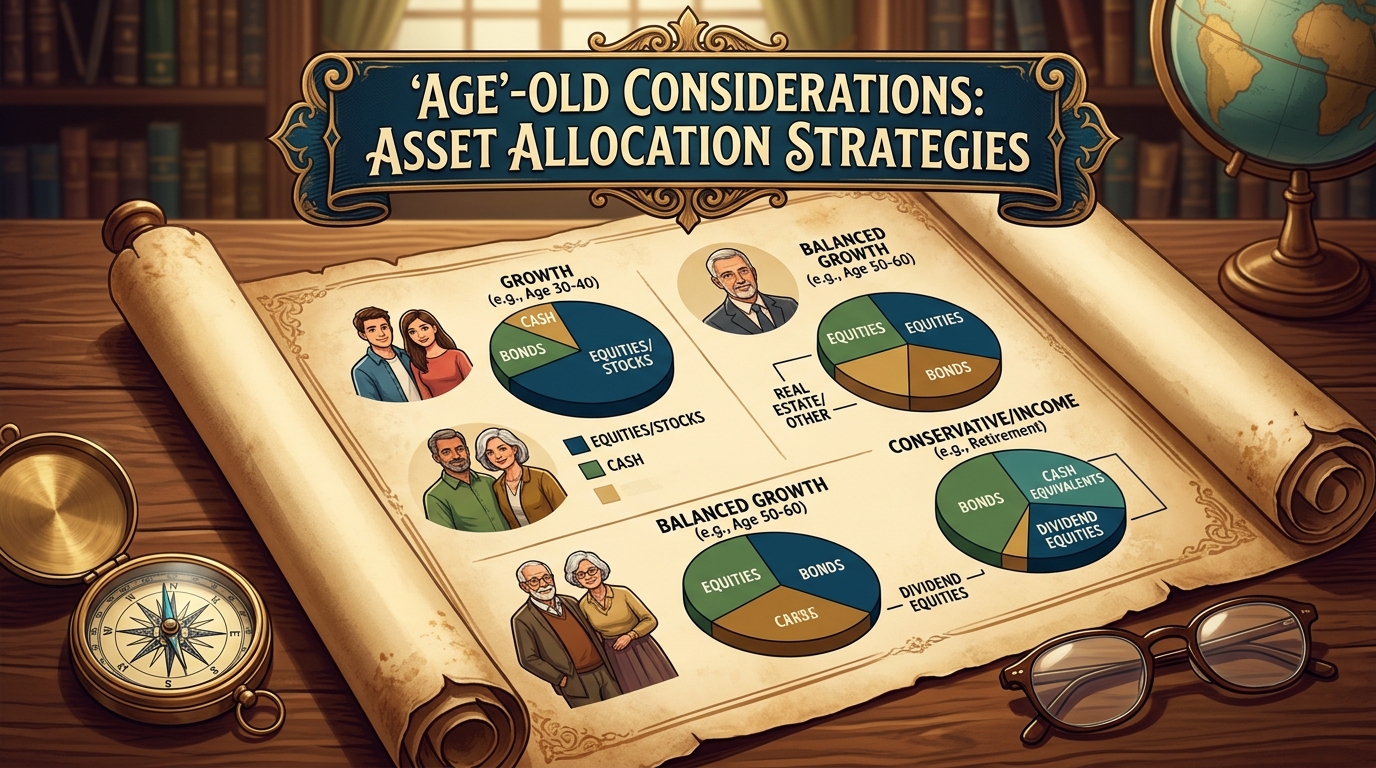
“Age”-Old Considerations: Asset Allocation Strategies
Quick Summary: Asset allocation is the way investments are divided among stocks, bonds, cash, and similar holdings. While age can provide a useful reference point, a well-designed investment strategy should also reflect your goals, timeline, income needs, financial circumstances, and comfort with market risk. At Boyer and Sappenfield Investment Advisors, we help individuals and families in Arcola and Villa Grove, Illinois, consider these factors as part of a broader financial planning and retirement planning approach.
Understanding Asset Allocation
Asset allocation is an important part of investment management because it determines how your portfolio is spread across major investment categories. Stocks, bonds, and cash or cash equivalents each tend to respond differently to changing market conditions. Combining them thoughtfully can help create an investment mix aligned with the purpose of your money.
Stocks are commonly associated with long-term growth potential, although their values can move sharply over shorter periods. Bonds and cash generally offer more stability, but they may provide lower potential returns over time. The appropriate balance depends on whether your priority is growth, retirement income planning, preserving assets, or a combination of those objectives.
Risk Tolerance Is More Than a Number
Before deciding how much of a portfolio should be invested in each asset class, it is important to consider risk tolerance. This includes the emotional side of investing: how comfortable you are when markets rise and fall. It also includes the financial side, such as the reliability of your income, the savings you have available, and the strength of your overall financial cushion.
For example, a person with dependable income and a well-established emergency reserve may be in a different position to accept market volatility than someone whose income or savings is less secure. A portfolio should account for both the risk you are willing to take and the risk you are financially able to take. This perspective can be more meaningful than relying on age alone.
In broad terms, investors are often described as aggressive, moderate, or conservative. An aggressive investor may emphasize growth and accept greater market movement. A moderate investor may seek a middle ground between growth potential and stability. A conservative investor generally places a higher value on protecting principal and limiting risk.
How Age Fits Into an Investment Strategy
Age can still be a helpful consideration in financial planning, but it should not be treated as a fixed formula. Investors earlier in their careers may have more time to recover from market declines, which can make a larger allocation to stocks practical for some people. Those approaching retirement often begin to evaluate how their portfolio can support stability, income needs, and continued growth.
Retirement does not necessarily eliminate the need for growth-oriented investments. Longer life expectancies, future spending needs, and legacy goals may all affect the role growth plays in a retirement portfolio. The key is to view age as one part of the conversation rather than the sole driver of investment management decisions.
The Rule of 110 as a Starting Point
One commonly used guideline is the Rule of 110. Under this approach, an investor subtracts their age from 110 to estimate a possible percentage for stock investments. For instance, the rule would suggest that a 40-year-old could hold approximately 70% in stocks and 30% in bonds.
This type of rule can offer a simple starting reference, but it cannot capture every personal detail. It does not account for your specific financial goals, investment experience, retirement income needs, risk tolerance, or the level of volatility you can reasonably withstand. A financial advisor can help put general guidelines into the context of your full financial picture.
Why Diversification Remains Essential
Diversification is another core consideration in wealth management. Rather than concentrating all investments in one asset type or market segment, diversification spreads exposure across different asset classes and sectors. This can help reduce the impact of poor performance in any one area of a portfolio.
Diversification does not remove market risk or guarantee results. However, a diversified investment approach may help smooth the effect of changing market conditions over time. It is a practical component of an allocation strategy designed to support long-term goals.
Factors That Matter Beyond Your Age
Your investment time horizon deserves careful attention. Money intended for a goal many years away may allow for a different approach than money you expect to use within the next few years. Generally, a longer timeline can support a more growth-focused strategy, while a shorter timeframe may call for greater emphasis on stability.
Your goals matter just as much. You may be focused on accumulating assets, producing retirement income, preserving wealth, or preparing for a future transition. Your income, portfolio size, reliance on investments, and other financial planning priorities can all influence the allocation that makes sense for you.
Other areas of your financial life may also shape the discussion. Retirement planning, tax-aware strategies, estate planning guidance, lifestyle planning, and IRA rollover guidance can each affect how you think about your investments. At Boyer and Sappenfield Investment Advisors, we believe investment decisions work best when they are considered within a broader, coordinated plan.
Reviewing and Rebalancing Over Time
Asset allocation is not a one-time decision. Your circumstances can change with a new job, a growing family, a retirement transition, or other life events. Market movement can also cause your portfolio to drift away from the mix you originally intended to maintain.
Regular reviews provide an opportunity to determine whether your current holdings still reflect your objectives and risk preferences. Rebalancing, when appropriate, can help restore the intended relationship between stocks, bonds, cash, and other investments. Keeping your strategy current is an important part of ongoing retirement planning and investment management.
Building an Allocation Around Your Life
Age-based guidelines can be useful, but they are not a substitute for an investment strategy built around your individual situation. A thoughtful approach considers your goals, timeline, financial resources, income needs, and response to risk. It should also be flexible enough to evolve as your life and priorities change.
At Boyer and Sappenfield Investment Advisors, our family-led team works with individuals and families from our Arcola and Villa Grove offices to help simplify important financial decisions. Whether you are reviewing your current portfolio, preparing for retirement, or evaluating an employer-plan rollover, we can help you look at how your investment allocation fits within your larger financial plan.
Taking time to review your asset allocation can be a valuable next step. Consider whether your current mix still supports your objectives and whether it reflects the amount of risk you are both willing and able to take. A conversation with a financial advisor can help you evaluate the details and move forward with greater confidence.