
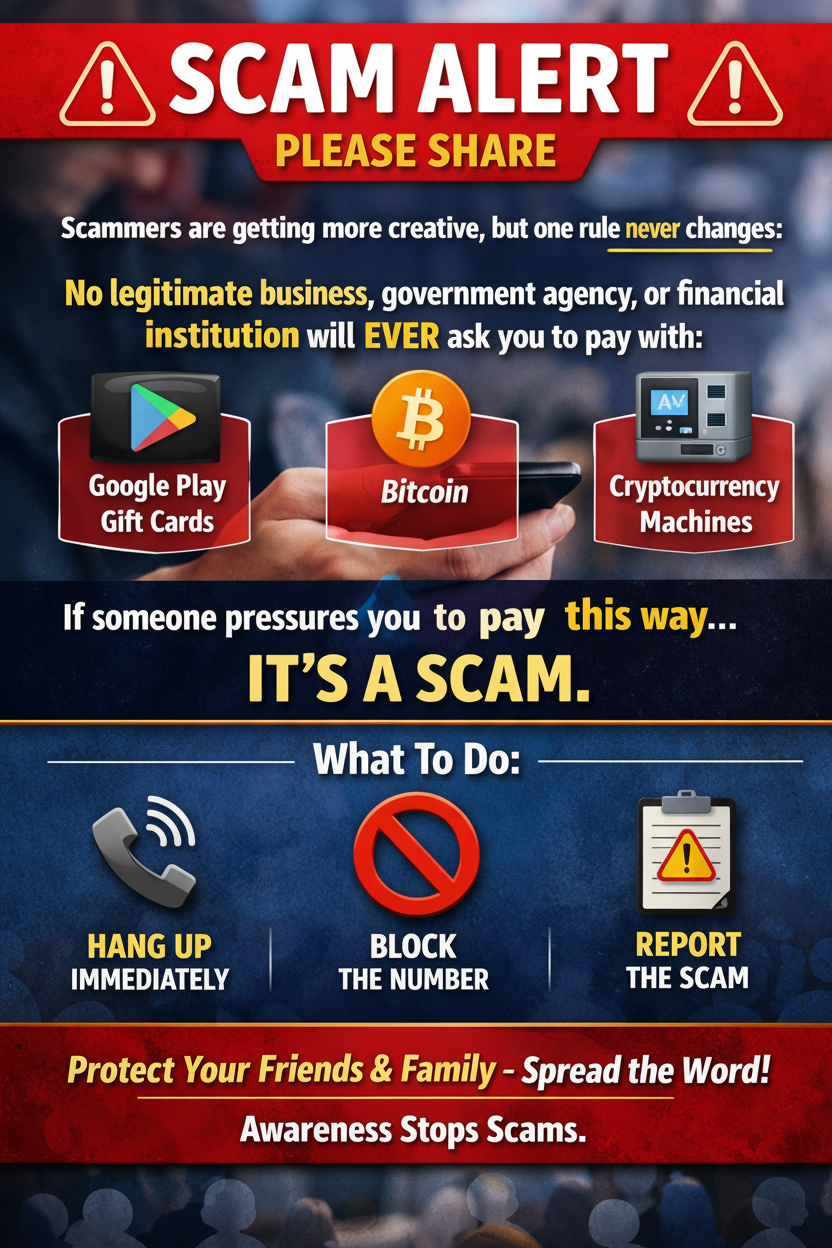
How to Spot a Scam: Key Red Flags Everyone Should Know
Scammers are constantly changing their tactics, but their goal remains the same: to trick people into giving away money or personal information. The good news? Most scams follow recognizable patterns. By understanding the warning signs, you can protect yourself and help others stay safe too.
1. Unexpected Urgency or Pressure
Scammers often try to rush you so you don’t have time to think. They may claim your account is compromised, a bill is overdue, or someone you love is in danger. Any message—email, text, or phone call—that demands immediate action is a major red flag.
2. Requests for Unusual Payment Methods
No legitimate organization will ever ask you to pay with:
- Google Play or other gift cards
- Bitcoin or cryptocurrency machines
- Peer-to-peer apps with instructions to mark payments as “friends and family”
If someone insists on these methods, it’s almost certainly a scam.
3. Messages From Unknown or Unverified Sources
Be cautious of emails or texts from senders you don’t recognize—especially if they include links or attachments. Scammers often impersonate trusted brands or government agencies using look-alike email addresses or logos.
4. Offers That Sound Too Good to Be True
Promises of huge prizes, guaranteed investment returns, or “free money” are common scam tactics. If it sounds too good to be true, it probably is.
5. Requests for Personal Information
Legitimate companies will not ask for your Social Security number, banking details, or login credentials through email, text, or social media. Always verify with the organization directly using a known, official phone number.
6. Poor Grammar, Misspellings, or Strange Formatting
Scam messages often contain awkward phrasing or typos. This is a telltale sign that the communication may not be from a professional source.
7. High-Pressure Emotional Manipulation
Scammers may use fear, excitement, or sympathy to influence your decisions. Whether it's a fake emergency involving a family member or a supposed investment opportunity, trust your instincts and take a moment to pause.
How to Protect Yourself
- Verify requests using official contact methods.
- Never click suspicious links or download unexpected attachments.
- Enable multi-factor authentication on important accounts.
- Speak with a trusted advisor before sending money or sharing info.
Staying informed is your best defense. By recognizing the red flags, you can avoid scams and help others stay safe, too.